
Sports injury
Sports injuries divide broadly into acute injury and overuse. The distinction matters because they need different handling: acute injury needs early protection and graded loading, while overuse needs the underlying cause found and changed, or it recurs.
Understanding the problem
Acute injury and overuse are different problems
An acute injury has a moment — a landing, a twist, a collision. An overuse injury does not; it builds up because tissue is loaded repeatedly faster than it recovers. The management differs accordingly. For acute injury, the early question is what was damaged and how much it should be loaded. For overuse, treating the painful tissue without changing what caused the overload simply resets the clock.
Returning to activity too early is the most common reason an injury becomes a recurring one. Graded return matters as much as the treatment itself.
What a first visit involves
How we work through it
We do not begin treatment on first meeting you. The assessment comes first.
- History — we listen firstWhere the pain is, when it started, what makes it worse, previous injuries, and your work and sleep posture. For accident or work injury cases, how the incident happened.
- Physical examinationPalpation, range of motion testing, and a neurological check of reflexes, strength and sensation — to work out whether the problem is structural, neurological or soft tissue.
- Digital X-ray if indicatedTaken on site. Whether it is needed is a clinical judgement, not a default for every patient.
- Findings and plan explainedIn the same visit you are told what was found, the likely cause, what is proposed and roughly how many visits it may take — before anything begins.
At the clinic
Treatment rooms and equipment
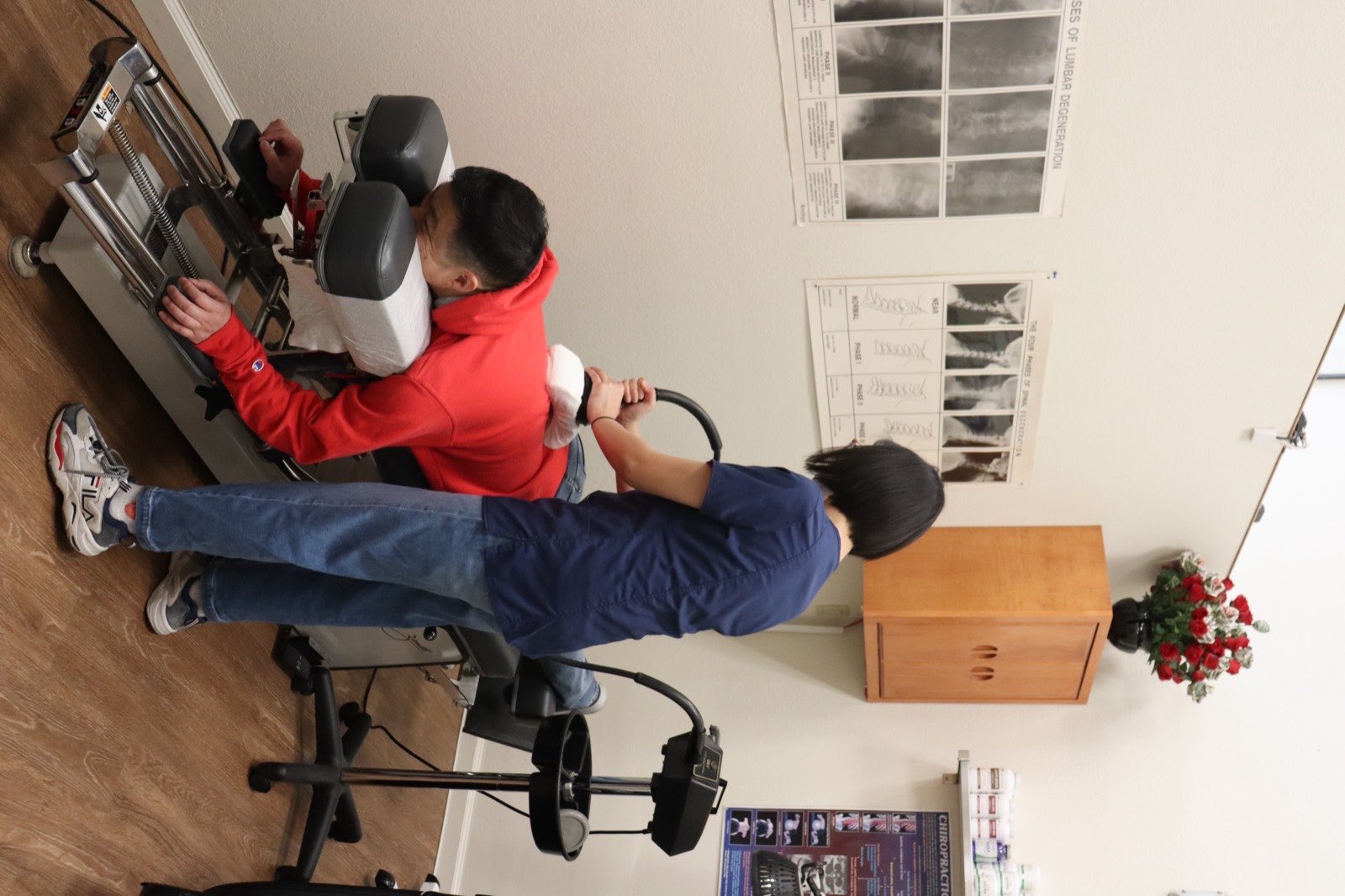
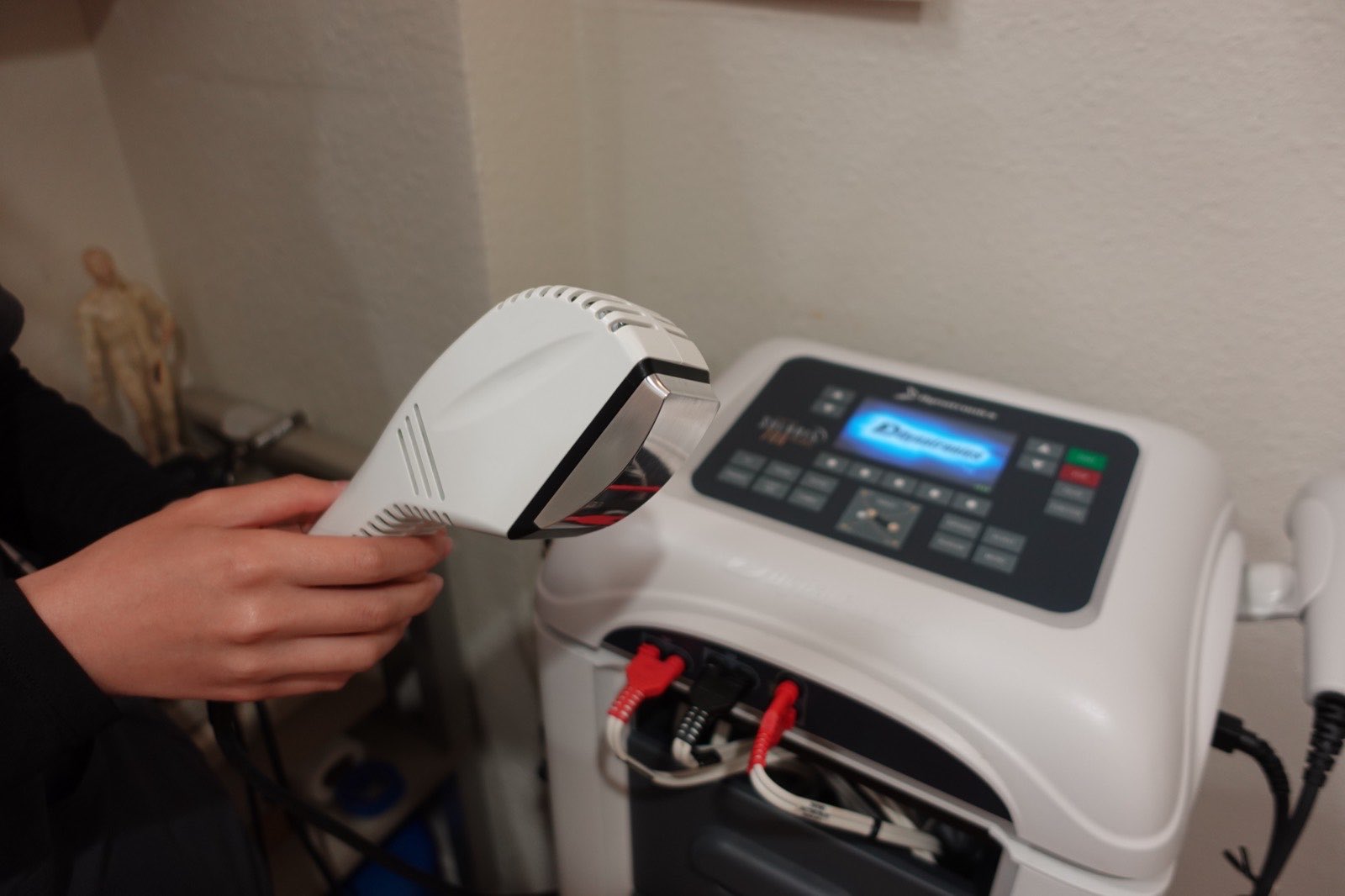
What may be used
Combined according to the assessment
Not every patient needs every item. What is used follows from what the examination shows.
- Assessment of the injured region and contributing mechanics
- Digital X-ray where clinically indicated
- Chiropractic adjustment where indicated
- Soft-tissue and therapeutic massage
- Electrical stimulation and ultrasound therapy
- Cold therapy acutely, heat later
- Graded rehabilitation and return-to-activity programme
Fees and insurance
Who usually pays for this
How treatment is funded changes what paperwork you need. Pick the closest to your situation:
Auto accident
The at-fault driver's liability cover, MedPay on your own policy, or on a lien where you are represented.
What you need →Work injury
California workers' compensation — approved treatment is paid by the employer's insurer.
How it works →Private insurance
What PPO plans typically cover, and deductibles.
How to check →Self-pay
Self-pay rates, including initial examination with digital X-ray.
See rates →Why here
A few objective points
1988 — 38 years
Same practitioner, same Oakland Chinatown block since 1988.
Cantonese · Mandarin · Taiwanese · English
From history-taking to explaining the plan, in the language you are most comfortable in.
Digital X-ray, same visit
Where imaging is clinically indicated it is taken here, not at a separate centre.
5 min from Lake Merritt BART
Madison professional building, downtown Oakland. Building and street parking.

FAQ
Frequently asked questions
How soon can I get back to training?
It depends on the tissue and the injury. We give a graded plan rather than a single date, because returning at full load too early is the main reason injuries recur.
Do I need imaging?
Only where the examination suggests it would change management — for example where a fracture needs ruling out. It is not routine.
My injury keeps coming back
That usually points to an underlying mechanical cause that has not been addressed — a movement pattern, a strength imbalance, or a training load issue. Recurring injury is worth assessing differently from a first-time one.
Related
You may also need these
Request a call
Can't call right now? Leave a time and we'll call you
We book by phone. If now isn't a good time, fill in the form below and we'll call you during clinic hours.